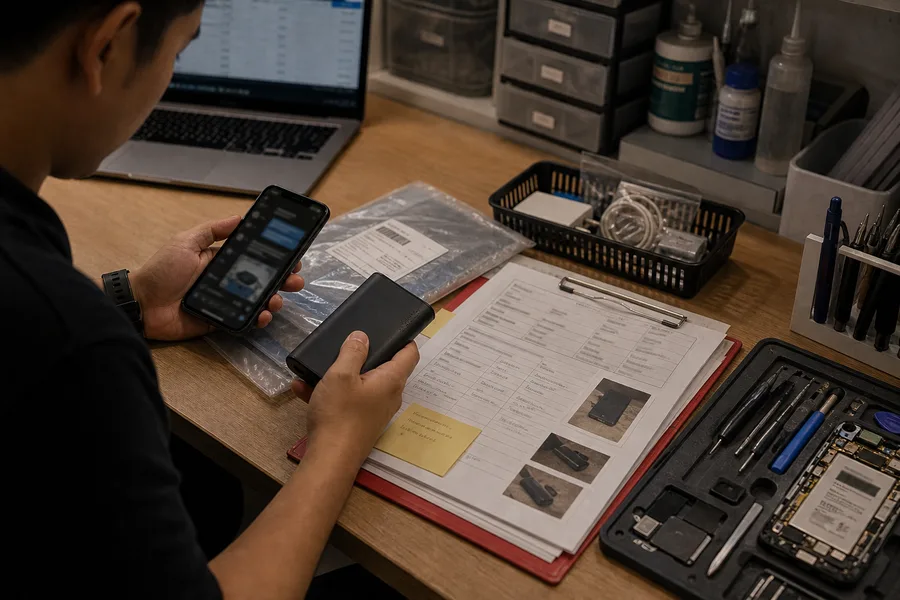
Warranty language becomes risky when sellers cannot show who repairs, replaces or refunds the product in the customer market.
A promise needs a route
Marketplace sellers often use simple warranty language because customers expect reassurance. The promise becomes risky when no team owner can show how the seller will perform it in the customer market. Repair, replacement and refund routes may differ by country, product and platform rule.
The seller should keep a warranty file for products that generate technical questions or returns. The file should name the repair route, spare-part source, response owner and decision rule for refunds.
| Warranty item | Evidence | Risk if missing |
|---|---|---|
| Repair route | Local or cross-border process | Slow disputes |
| Spare parts | Availability and lead time | Broken promise |
| Response owner | Support escalation path | Inconsistent answers |
| Refund rule | Platform and seller terms | Rating damage |
Case pattern: the unsupported repair promise
A seller promises a repair option for an electronic accessory. The product sells well until a batch creates repeated failures. Support learns that spare parts sit with the overseas supplier and shipping them costs more than the product. Customers hear different answers from different agents.
The warranty promise covered more than the operating route could support. A file review would have forced the seller to choose replacement, refund or local repair before the claim appeared on the product page.
Build warranty evidence by SKU
Warranty files should sit beside product and listing records. If warranty text changes, support scripts and supplier agreements should change with it.
Review the file after returns, supplier changes or market expansion. A promise that works in one market may fail in another because repair routes and shipping costs differ.
- Map warranty promises by SKU and market.
- Name repair, replacement and refund owners.
- Confirm spare-part access before launch.
- Align support scripts with listing terms.
- Review warranty complaints monthly.
Working-file review
A practical review starts with one live product, one active order and one current customer-facing page. Put the next check in the review note, not in a separate chat thread.
The review should produce a small decision note. The owner should use the case file to mark which fact controls the next step.
Use the same test after the next supplier change, route change, campaign launch, listing edit or complaint pattern. Keep the order file narrow enough for a buyer, seller or operator to use during a live review.
A good checkpoint is whether a new employee could open the folder and answer the main question in ten minutes. The listing file should name the record that blocks expansion until proof arrives.
That simple test keeps the article grounded in operations, not theory. Save the source beside the payment file so the team can reopen the check without guessing.
The handoff should also say what the team will not claim until evidence improves. The shipment file should state which order, listing, route or payment term stays limited.
That boundary should be visible to sales, support and finance. Add the owner to the supplier file before the decision moves to another team.
If those teams cannot see the boundary, the next public promise will drift again. The claim file should leave the reader with one record to update before the buyer escalation.
For recurring risks, sample one file each month and record whether the boundary still holds. Keep the check short, dated and tied to the account file.
Keep that sample note with the live file. Use the broker file to separate the fact the team knows from the proof it still needs.
Record note: shopee warranty promises local repair
Warranty promises are part of reputation and compliance risk. They should be supported by operating evidence, also sales language.
A seller that knows its repair route can answer customers faster and avoid turning a small defect into a public dispute.
Does warranty evidence matter for low-value products?
Yes when warranty claims affect ratings, platform disputes or product safety questions.
What should sellers keep?
Keep warranty text, repair route, spare-part availability, response owner and customer-message templates.
For the shopee warranty promises local repair file, the owner should add one dated check before the next order, listing change or payment release. That check should name the source record, the person who confirmed it and the trigger that will reopen the review. The note should also say which action remains limited until the missing proof arrives.
Practical follow-through. For Shopee Warranty Promises: Local Repair Evidence Behind Them, A short exception log is more useful than a broad promise of compliance. It should state what was checked, what was missing, who accepted the residual risk and what event will trigger another review. That keeps a temporary workaround from silently becoming the normal process.