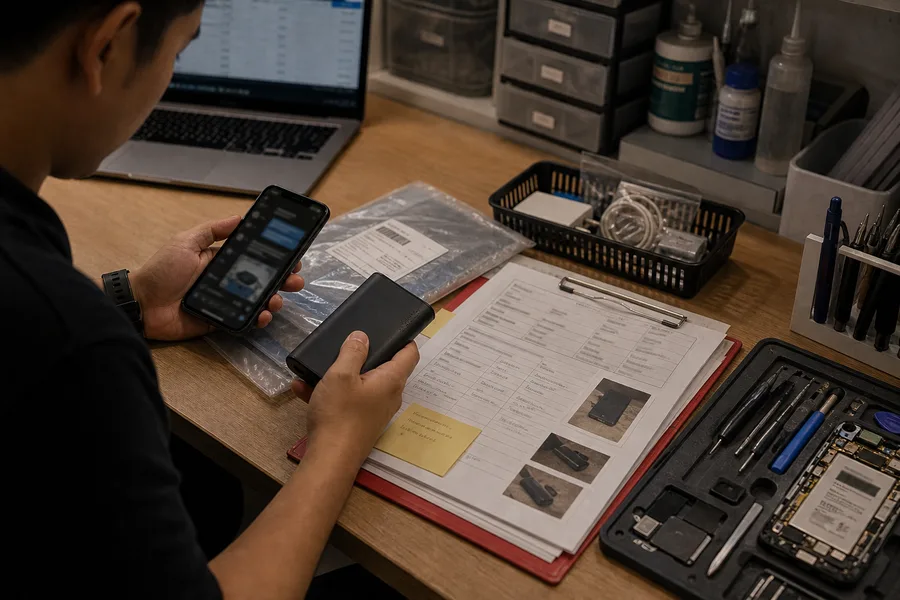
A warranty claim is only as useful as the service route behind it. A Shopee listing may promise local repair, replacement or a fixed response time, but the seller needs to know who receives the product, who can inspect it, which parts are available and what happens when a repair cannot be completed. A vague warranty line creates a customer promise that operations may not be able to meet.
Map the route before publishing the claim
For each market, record the repair partner, service address, intake method, return shipping responsibility, expected inspection time and escalation contact. If the seller uses a third party, keep the agreement or operating confirmation that shows the partner can service the relevant product. A warehouse that accepts returns is not automatically a repair route.
Link the route to the product version and warranty terms. A service partner may handle one model, battery type or spare-part range but not another. The listing should not imply universal local support when the actual scope is narrower.
| Warranty promise | Operational proof | Review trigger |
|---|---|---|
| Local repair | Named service partner and product scope | Partner or model change |
| Replacement | Stock and authorization process | Inventory or policy change |
| Fixed response period | Support and inspection capacity | Peak season or backlog |
| Spare parts availability | Parts list and replenishment plan | Version or supplier change |
Keep the customer record connected to the product file
When a claim arrives, capture the order, SKU, product version, defect description, photos, service route and decision. A repeat pattern may point to a product defect, shipping issue, setup problem or misleading listing. The case record lets the seller distinguish those outcomes instead of treating every return as a generic warranty cost.
Support staff should not promise a repair outcome before confirming the relevant route and stock. Give them a clear script for intake, diagnosis and escalation so customers receive the same information across marketplace messages and email.
Test the route with a live sample
Run a controlled test after a new product, partner or market launch. Confirm that a customer can reach the service route, receive a return instruction and obtain a realistic timeline. Record the result and fix any gap before a campaign increases sales volume.
Review closed claims monthly. If repairs take longer than the public promise, parts are unavailable or customers repeatedly receive a replacement instead of repair, update the listing terms and service file. The useful warranty record is the one that reflects what the customer actually experiences.
Write down the decision boundary
Where local repair is unavailable, state whether the seller will offer return, replacement, remote support or another remedy. Keep that boundary in the product and support file. It gives the team an honest way to manage claims without making a broader promise than the service route supports.
Handle cases that cross the service boundary
A customer may return a product to a local warehouse that cannot repair it, or request support for a version outside the partner's scope. The support record should state the next route: diagnostic review, replacement, refund, supplier escalation or return to a different facility. Do not leave the customer with a local-repair promise when the product will actually travel through a different process.
Save the handoff and final outcome. This helps the seller see whether a partner, parts supply or warranty wording causes repeat friction. If a particular model repeatedly bypasses repair, the product and listing owner should review the public warranty claim.
Measure the service promise against actual cases
Track intake time, inspection time, remedy time and customer communication for a small sample. Compare those results with the promised response or repair period. A service route may work on paper but fail during peak periods, cross-border returns or parts shortages. Use the sample to adjust the promise or capacity before a large campaign increases claims.
Keep replacement stock separate from product versions that are under review. A customer should not receive a replacement that carries the same unresolved issue or unsupported warranty route. The support record should identify the replacement model, source and service terms before the remedy is offered.
When the warranty depends on customer registration, installation or use conditions, make those conditions visible before purchase and in the support flow. A hidden condition is unlikely to function as a practical control when a real claim arrives.
Give customers a clear status update when a service route changes. A transparent message about inspection, parts or replacement timing is more useful than a generic statement that the claim is under review.
Save the final remedy decision with the SKU record so the next support agent can see how the case was resolved.
Review the warranty route before each high-volume campaign. A service promise that worked at normal volume may fail when claims, returns and spare-part requests rise together.
Working file check. In the context of Shopee warranty claims: service-route evidence, For small teams, the key is proportionate follow-through. Record what was checked, keep the underlying file where the next owner can find it, and set a review date only where the risk can genuinely change. That approach is more reliable than collecting documents once and assuming they remain valid for every order and market.