Retained samples help only when buyers can match them to batch, supplier, approval decision and complaint history.
A retained sample needs a story
Many teams keep product samples in cabinets. Months later no team owner knows which batch, supplier, approval meeting or product version the sample represents. The object remains, but the evidence value fades.
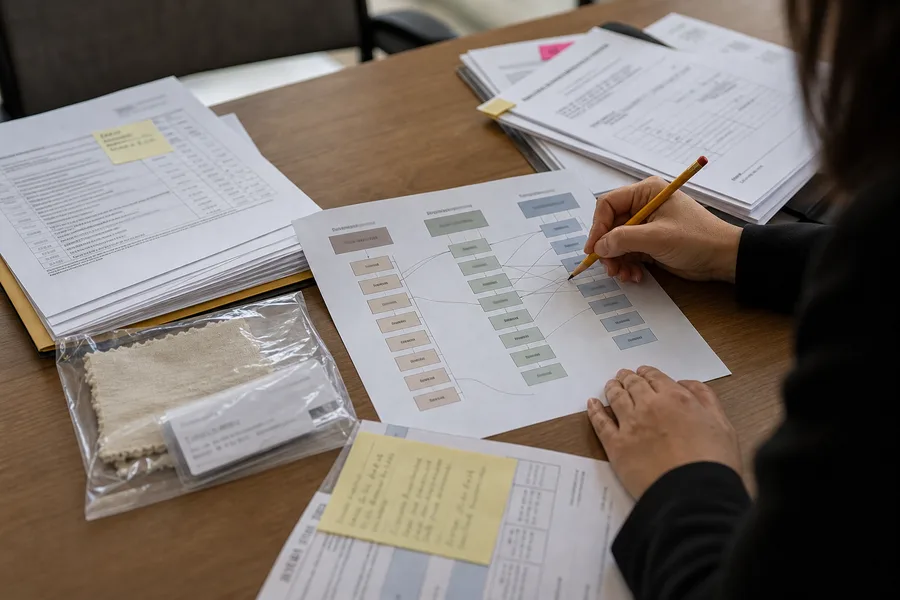
A sample retention file should label sample date, supplier, batch, approval decision, test status and reason for retention. The label should be readable without opening old emails.
The useful file starts with the operating record, not with a policy label. Add the owner to the order file before the decision moves to another team.
| Review point | Question for the team | Evidence to keep |
|---|---|---|
| Batch link | Which production run does it represent? | PO, batch or shipment note |
| Approval decision | Why was the sample accepted? | Decision note |
| Test status | Was evidence complete? | Test or inspection record |
| Complaint link | Did later complaints relate to sample? | Complaint comparison note |
Case pattern: the mystery sample
A buyer pulls an old retained sample after a defect complaint. The sample looks similar, but no team owner can tell whether it came from the approved batch or a sales sample. The supplier disputes the comparison.
The sample cabinet lacked labels and decision notes. The physical sample could not support the dispute.
The correction should not sit inside one private message. The listing file should leave the reader with one record to update before the account review.
Label samples at the moment of decision
Label retained samples when the team approves or rejects them. Waiting until a complaint arrives almost guarantees missing context.
Keep photos of samples with the same labels. A digital copy helps remote teams compare evidence before the physical cabinet is opened.
- Label sample with batch or PO.
- Record approval or rejection reason.
- Attach test and inspection status.
- Photograph sample and label.
- Review retained samples after complaints.
File check
Start with one live example rather than a whole catalogue. Keep the check short, dated and tied to the payment file.
The operator should write down the exact mismatch. Use the shipment file to separate the fact the team knows from the proof it still needs.
Open the sample cabinet and choose five items. If a new employee cannot identify the batch and decision note, relabel the retention process.
- Check physical label.
- Check digital photo.
- Check approval note.
- Link sample to complaint review.
File handoff: sample retention cabinets batch labels
A handoff works when a new operator can act from it. Put the owner, evidence gap, accepted limit and trigger in the note. Keep that record in the supplier file so the next reviewer can see who owns the decision.
The handoff loses value when it sits away from the file. Put it beside the record that controls the next decision. The claim file should show the source, date and business limit in one place.
Add one expiry trigger. Put the next check in the account file, not in a separate chat thread.
Run one monthly sample while the topic remains active. The owner should use the broker file to mark which fact controls the next step.
This keeps the control practical. A seller does not need a committee for every small issue. It needs a rhythm that catches drift before the drift reaches customers, platforms or border documents. Keep the sample file narrow enough for a buyer, seller or operator to use during a live review.
Closeout check: sample retention cabinets batch labels
Sample retention works when the sample carries context.
A labeled cabinet gives buyers evidence they can use when quality questions appear months later.
How long should samples be retained?
Set periods by product risk, warranty life, claim exposure and customer requirements.
Do rejected samples matter?
Yes. Rejected samples explain decisions and help identify repeated supplier proposals.
For the sample retention cabinets batch labels file, the owner should add one dated check before the next order, listing change or payment release. That check should name the source record, the person who confirmed it and the trigger that will reopen the review. The note should also say which action remains limited until the missing proof arrives.
For the sample retention cabinets batch labels file, the owner should add a second dated sample before the next commercial step. The sample should include the active record, one external source, one internal owner and the event that will reopen the check. This keeps the page useful after the first cleanup pass.
Practical follow-through. For Sample Retention Cabinets: Batch Labels and Decision Notes, The handoff matters as much as the original check. Put the source record, the product or supplier identifier and the current decision in a place where sales, sourcing and support can locate them without reconstructing the story from old emails. The record can be brief, but it must be traceable.