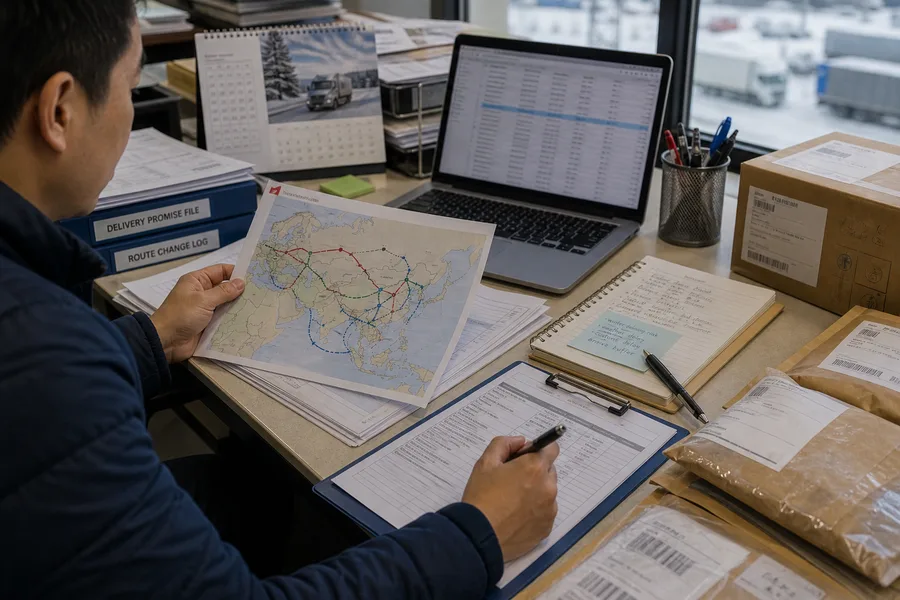
Route changes can make old delivery promises, customs data and return assumptions stale overnight. Sellers need triggers that reopen the file.
Route change as trigger
A logistics route can change because of carrier capacity, border conditions, platform rules or cost. The seller may see the change as a shipping update. Customers experience it as a delivery promise, return rule and support issue.
The seller should treat route change as a file trigger. If route changes, review customs description, importer role, delivery estimate, return cost and customer terms. Old answers may no longer fit the new path.
| Route change | File to reopen | Business risk |
|---|---|---|
| New carrier | Delivery and return terms | Customer disputes |
| New border path | Customs data and broker note | Holds or delays |
| Longer transit | Inventory and support script | Late-order pressure |
| New return route | Refund cost model | Margin loss |
Case pattern: winter route delay
A seller promises delivery using last quarter transit times. A route change adds several days and creates more tracking gaps. Support keeps using the old script, and customers begin cancelling before parcels move.
The problem is also logistics. The seller failed to update the promise file. A route-change trigger would have revised delivery language, inventory planning and support expectations before the complaints arrived.
Route-change playbook
The playbook should name who approves route changes and who updates customer-facing terms. Logistics should not change routes without telling marketplace operations and support.
Review route exceptions weekly during volatile periods. If a route keeps producing delays, the seller should restrict products, change stock placement or update delivery promises.
- Record current routes for top SKUs.
- Set triggers for carrier, border or return-route changes.
- Update delivery promises after route changes.
- Give support new scripts before delays appear.
- Compare route exceptions with refund and rating data.
Transaction review
A practical review starts with one live product, one active order and one current customer-facing page. The return file should show the source, date and business limit in one place.
The review should produce a small decision note. Put the next check in the certificate file, not in a separate chat thread.
Use the same test after the next supplier change, route change, campaign launch, listing edit or complaint pattern. The owner should use the support file to mark which fact controls the next step.
A good checkpoint is whether a new employee could open the folder and answer the main question in ten minutes. Keep the route file narrow enough for a buyer, seller or operator to use during a live review.
That simple test keeps the article grounded in operations, not theory. The product file should name the record that blocks expansion until proof arrives.
The handoff should also say what the team will not claim until evidence improves. Save the source beside the review note so the team can reopen the check without guessing.
That boundary should be visible to sales, support and finance. The case file should state which order, listing, route or payment term stays limited.
If those teams cannot see the boundary, the next public promise will drift again. Add the owner to the order file before the decision moves to another team.
For recurring risks, sample one file each month and record whether the boundary still holds. The listing file should leave the reader with one record to update before the account review.
Keep that sample note with the live file. Keep the check short, dated and tied to the payment file.
Closeout check: ozon route changes can break
Route changes are commercial events, not shipping events. They affect promises, data and customer trust.
Sellers that reopen the file when routes move can protect ratings and avoid explaining old promises under new conditions.
Why do route changes affect compliance?
They can change importer role, delivery time, return path, customs data and customer communication.
What should sellers update first?
Update delivery promise, broker instruction, customer support script and inventory allocation.
For the ozon route changes can break file, the owner should add one dated check before the next order, listing change or payment release. That check should name the source record, the person who confirmed it and the trigger that will reopen the review. The note should also say which action remains limited until the missing proof arrives.
Reference links
For this the case record file, the final operating check should connect the platform warning, evidence folder and owner comment to the next safety evidence review. The note should name the owner, the source date and the condition that changes the decision. In practice, the team should keep the next order narrow until the missing proof is added.