CBP UFLPA statistics do not tell an importer whether one shipment will clear. They do show which weak files will cost time when a port team asks for material origin, supplier links and entity screening records.
File handoff for: UFLPA dashboard data and the case for event-level evidence
CBP publishes UFLPA enforcement statistics by industry, shipment status and value. A sourcing team should not read those numbers as a forecast. A port decision turns on the records behind one shipment, not the market average. The dashboard still gives importers a useful warning: customs teams will keep asking for files that explain who made the goods, where inputs came from and whether any named entity sits in the supply chain.
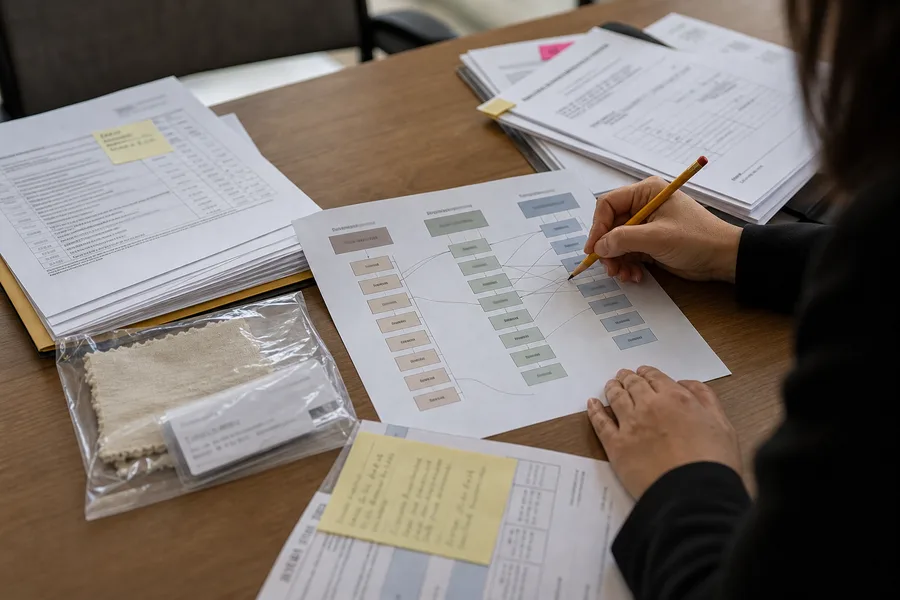
The mistake small importers make is treating UFLPA as a legal memo kept outside the order file. That memo helps, but the shipment still needs a practical evidence trail. The file should tie product, material, supplier, manufacturer, payment and transport records together. If the team has to reconstruct that chain after a hold, the review becomes slower and more expensive.
How the issue reaches operations in: UFLPA dashboard data and the case for event-level evidence
A useful reading starts with categories and outcomes. If a product category appears often in enforcement data, the importer should assume reviewers understand the usual weak spots. They may ask for purchase orders, production records, bills of materials, transport documents, supplier declarations and proof that the importer checked restricted-party exposure.
The dashboard also reminds teams that release and denial are not the only business outcomes. A long review can disrupt inventory, payment terms and customer promises. The importer should record review time, document requests and missing fields for each hold. That internal log will often teach more than a broad industry article.
| Dashboard signal | Importer question | File to prepare |
|---|---|---|
| High review volume in a sector | Do we know our material inputs? | Bill of materials and supplier tier map |
| Shipment release after review | Which evidence persuaded the reviewer? | Evidence index with dates and owners |
| Shipment exclusion or denial | Which gap did we fail to close? | Corrective action note and sourcing decision |
| Repeated holds by route | Is our broker data or origin story weak? | Broker instruction and transport record |
Decision gate for: UFLPA dashboard data and the case for event-level evidence
A buyer imports a product that contains textile material. The supplier provides a declaration that says the product is clean. The importer keeps the declaration in a general supplier folder. When CBP asks for the material origin path, the team can show an invoice and a packing list, but it cannot show where the input was made or which subcontractor handled the relevant production step.
The supplier may be legitimate. The problem is that the importer cannot read the file under pressure. A better file would separate finished-product evidence, material evidence, entity screening and transport records. It would show when the supplier last confirmed the information and who reviewed it before the purchase order.
Evidence to obtain for: UFLPA dashboard data and the case for event-level evidence
The work should start before the next high-risk purchase order, not after the first hold. Importers do not need a giant compliance platform to begin. They need a clean index that links the product sold to the material purchased, the parties involved and the records the broker may need.
A file owner should run this checklist monthly for products with forced-labor exposure. If the answer is missing, the buyer should pause the order, narrow the scope or ask the supplier for a dated update before shipment.
- Map the top products by material and country exposure.
- Name the manufacturer, exporter, invoice issuer and payment beneficiary.
- Screen supplier names and known entities before purchase order approval.
- Keep transport records and production evidence in the same order file.
- Record every customs question and the final answer sent.
Pause-or-proceed test for: UFLPA dashboard data and the case for event-level evidence
A useful test is to put one live order, one active listing and one supplier file beside this briefing. Keep the order file narrow enough for a buyer, seller or operator to use during a live review.
Do not wait for a perfect compliance system. The listing file should name the record that blocks expansion until proof arrives.
Keep the record of the test in the same folder as the order or listing. Save the source beside the payment file so the team can reopen the check without guessing.
Set a review rhythm after the first pass. The shipment file should state which order, listing, route or payment term stays limited.
The team should keep a change log beside the evidence. Add the owner to the supplier file before the decision moves to another team.
- Choose one product or shipment that is still active.
- Ask who owns each evidence item and where it is stored.
- Compare the public claim with the internal document.
- Record the business action if evidence is missing.
- Repeat the test after the next supplier, route or listing change.
The weak point in: UFLPA dashboard data and the case for event-level evidence
No. The statistics show enforcement patterns. The importer still needs product-level and supplier-level evidence for its own shipments.
Control record for: UFLPA dashboard data and the case for event-level evidence
Start with a material-origin map for the top products, then attach supplier names, purchase orders, transport records and entity-screening notes.