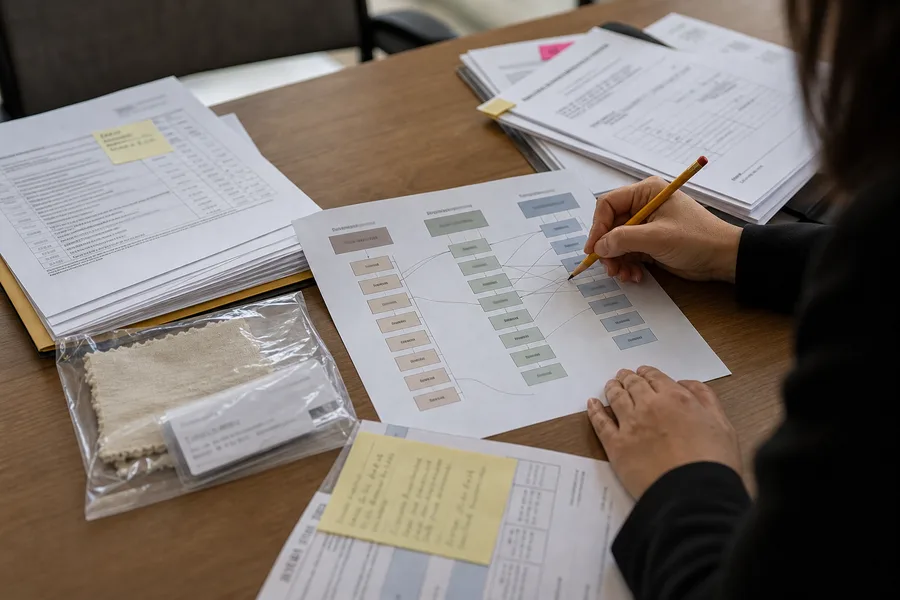
A supplier ownership change often reaches the buying team as a small administrative update. A new company extract arrives, a sales contact says the restructuring has no effect on production, and the next purchase order is already waiting. That sequence creates risk because ownership can affect more than the name on a registration record. It may change the people who control the factory, receive payment, approve subcontracting or answer a warranty claim.
The right response depends on the transaction. A buyer does not need to suspend a long-running relationship because one shareholder changed. The buyer does need a dated record that explains whether the legal change also affected the party that makes the goods, signs the contract or receives the funds. Treating the update as a document-refresh event keeps the review proportionate.
Start with the changed record
Pull the most recent registration extract and compare it with the copy used when the supplier was approved. Mark the specific change: shareholder, director, legal representative, registered address or ownership percentage. Then compare that change with the purchase order, contract party, invoice issuer and bank beneficiary. The review becomes useful when it answers one plain question: does the entity behind the commercial deal still match the entity in the due-diligence file?
Ownership changes frequently sit beside operational changes. A new shareholder may not alter a production line, but an acquisition can move purchasing, quality control or export activity to another affiliate. Ask the supplier to identify the factory, trading company and payment recipient involved in the current order. A short written explanation is enough when the records match. When they do not, record which relationship remains unproven and hold the related commercial step until someone can verify it.
| Changed fact | Buyer question | Record to refresh |
|---|---|---|
| Shareholder or controller | Who now directs the supplier? | Registration extract and ownership note |
| Legal representative | Who can sign or authorize the deal? | Authority record and contract contact |
| Payment beneficiary | Who receives the funds? | Bank confirmation and invoice comparison |
| Production site | Where does the current product come from? | Factory profile, audit or production evidence |
Use the next order as the test
A review is easier to close against a live transaction than against a general policy. Choose the next purchase order, shipment release or payment request and attach the updated evidence to that file. The buyer should be able to see the supplier name, product, amount, payment path and the person who accepted the ownership explanation. This avoids a familiar failure: a clean registry note in one folder and an outdated payee in another.
Consider a supplier that has delivered two successful orders. Before the third order, it reports that an owner has transferred shares to a related trading company and asks the buyer to use a new beneficiary account. The product, cartons and sales contact look unchanged. The buyer should not rely on those familiar details. A callback to a known contact, a current company extract, a bank letter and a note explaining the relationship between the factory, seller and beneficiary give finance a record it can rely on later.
Keep the result narrow. The buyer may permit a small order while holding an increase in deposit, credit terms or production volume. The file should state that boundary and the evidence needed to remove it. A vague label such as "ownership risk" does not tell the next reviewer what to do.
Close the review with a clear owner
Someone needs to own the refresh. In a small business, that may be the buyer with a finance signoff. In a larger importer, procurement can collect the supplier records while finance checks the beneficiary and compliance reviews sanctions or beneficial-owner information. The division matters less than the handoff. The file should show who checked each source, the date checked and the event that will reopen the review.
Useful reopen triggers include a new payment request, a factory move, a change in the contracting entity, a product expansion or another ownership filing. This gives the record a shelf life. It also prevents staff from treating a single document update as permanent proof when the commercial relationship continues to change.
Keep the evidence usable at handoff
Ownership reviews often fail at the handoff. Procurement may receive the registration document, finance may approve the bank account and the product team may keep using an old factory profile. Put the current extract, payment confirmation and operating explanation in the order file or supplier record that the next reviewer will open. Record the date of each source and the name of the person who checked it.
That record should also distinguish facts from statements still awaiting proof. If the supplier says a related company now handles exports, identify the related company and attach the supporting registration or agreement. If the factory has not changed, say which record supports that conclusion. Clear limits help the team continue routine work without silently accepting a larger exposure.