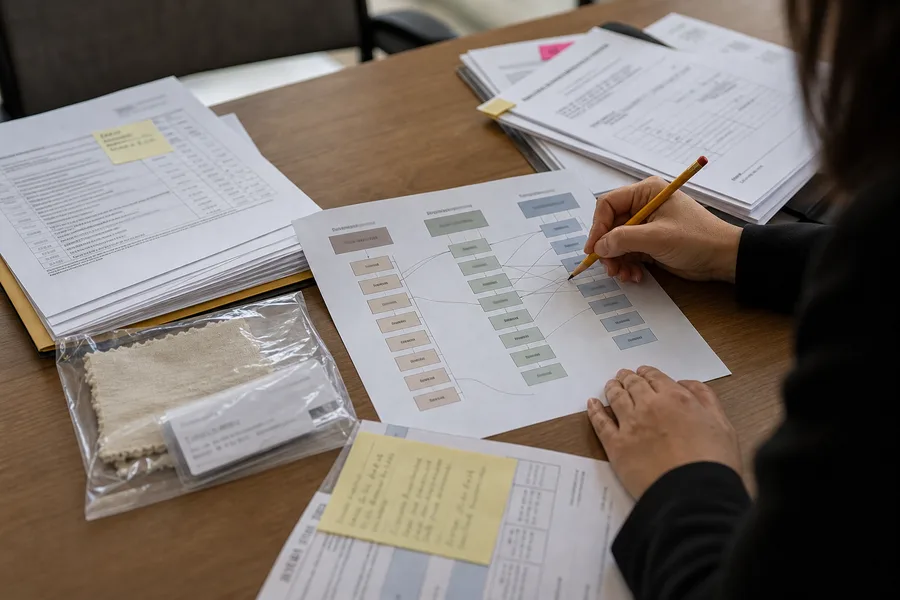
Factory audit photos help only when buyers know when they were taken, what they show and which follow-up action they triggered.
A photo without context is weak evidence
A factory photo can look convincing and still prove little. It may show a clean production line, storage area or certificate wall. Without date, location and finding notes, the buyer cannot tell whether the image belongs to the current supplier, current product or current issue.
The audit file should treat photos as evidence items. Each image should connect to an audit question, a product area and a follow-up decision. If the image only decorates a report, it will not help when the buyer needs to explain what it checked.
| Photo item | Required context | Weak version |
|---|---|---|
| Production line | Date, product and shift | Generic factory image |
| Certificate wall | Certificate scope and expiry | Unreadable image |
| Warehouse | SKU or material link | No product match |
| Corrective action | Before and after note | No owner |
Case pattern: the impressive audit deck
A supplier sends a polished audit deck with photos of equipment and workers. The buyer saves it but does not ask which products the line made that day. Later a defect appears, and the supplier says the product was made at a different subcontracted site.
The audit deck looked useful, but the buyer failed to connect photos to product scope. A simple location and product note would have exposed the gap before production.
Photos should trigger follow-up
Every audit photo that shows a risk should create a follow-up task. The task may ask for a document, a corrective action, a sample check or a second visit. The photo should not sit alone.
Buyers should also keep rejected or unclear photos. A blurry label or blocked storage area may reveal where the audit failed to gather enough evidence.
- Label photos by date and location.
- Connect photos to product scope.
- Record the finding behind each image.
- Assign follow-up owners.
- Keep before and after corrective action photos.
Team check
Review one recent audit deck and remove every photo that lacks date, place or finding. The remaining file may be thinner than expected. That is useful because it shows what the buyer can defend.
Ask auditors to write one sentence under each important photo. The sentence should explain why the image matters to the buying decision.
- Date and location
- Product or area label
- Finding note
- Follow-up owner
- Corrective action status
Handoff record: factory audit photos dates locations
The file should end with a short handoff note that a new operator can read without asking for the whole backstory. Save the source beside the payment file so the team can reopen the check without guessing.
Keep the note close to the live working file. The shipment file should state which order, listing, route or payment term stays limited.
The handoff should also say what the team decided not to claim. Add the owner to the supplier file before the decision moves to another team.
Use a small sample to keep the file honest. The claim file should leave the reader with one record to update before the payment review.
This sampling habit matters because most seller files decay through ordinary work. Keep the check short, dated and tied to the account file.
Add one expiry trigger to the file. The trigger can be a date, a product change, a new market, a supplier change or a complaint pattern. Without a trigger, the team may keep citing evidence that no longer fits the live business. Use the broker file to separate the fact the team knows from the proof it still needs.
Last file check: factory audit photos dates locations
Factory audit photos need context to become evidence. Buyers should connect each image to a dated question and a follow-up action.
A smaller, labeled photo file beats a large gallery that no team owner can explain.
Are factory photos reliable proof by themselves?
No. Photos should support a dated audit note, not replace entity checks, production records or corrective actions.
What should be attached to photos?
Attach date, location, product area, person taking the photo, finding and follow-up owner.
For the factory audit photos dates locations file, the owner should add one dated check before the next order, listing change or payment release. That check should name the source record, the person who confirmed it and the trigger that will reopen the review. The note should also say which action remains limited until the missing proof arrives.
Practical follow-through. For Factory Audit Photos: Dates, Locations and Follow-Up Notes, Before closing the item, test whether the evidence still matches the specific product, market and transaction in question. Documents often remain technically valid while their scope has changed. A named owner and a simple renewal trigger make that gap visible early enough to act on it.