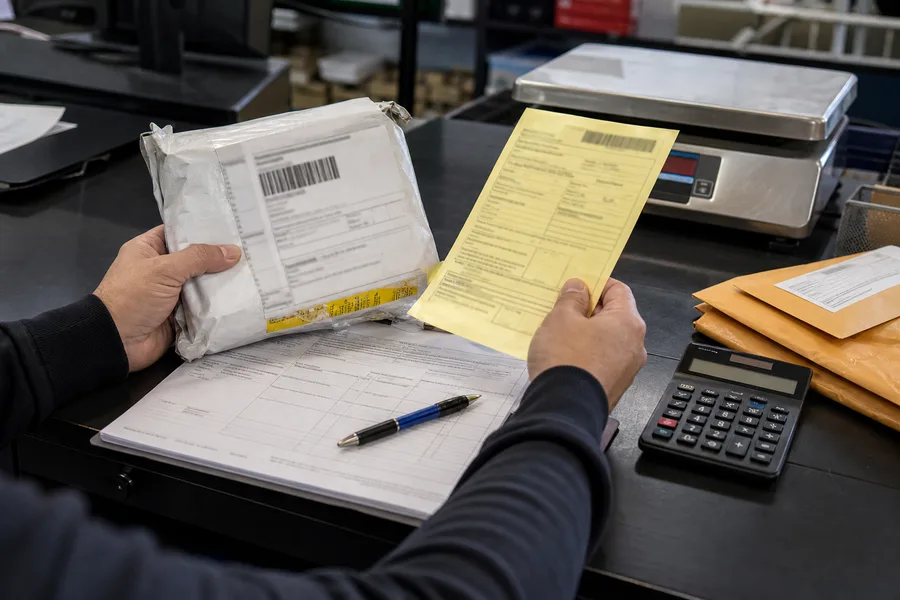
Sellers often screen suppliers and buyers but forget freight forwarders, warehouse parties and payment intermediaries that touch the transaction.
Screen the route, not only the supplier
A cross-border transaction involves more parties than buyer and supplier. Freight forwarders, brokers, warehouses, consolidation points and return processors may all touch goods, documents or funds. A seller that screens only the manufacturer leaves part of the route unreviewed.
The screening file should name the parties that control movement, documents or payments. The level of review can vary by market and risk, but the list should exist. If the seller cannot name the parties, it cannot explain the route.
| Party | Why screen? | Record |
|---|---|---|
| Forwarder | Controls movement | Contract or booking note |
| Broker | Submits data | Broker instruction |
| Warehouse | Handles goods | Address and operator |
| Return processor | Receives customer goods | Service agreement |
Case pattern: the unknown consolidation point
A seller uses a forwarder that consolidates parcels through a third-party warehouse. The seller knows the forwarder but not the warehouse operator. A customer asks for route assurance, and the seller can only provide a carrier label.
The missing party may not create a violation, but it creates a weak file. The seller should know who handles the goods at each control point and when that party changes.
Set a screening rhythm
Screening should not happen once and then disappear. Routes change, forwarders subcontract and return processors rotate. The seller should set a schedule and a trigger for review after route changes.
Keep screening results with route records. A route map without party checks leaves finance and compliance with separate pieces of the same transaction.
- List logistics parties by route.
- Screen higher-risk parties and markets.
- Record subcontractor changes.
- Review after route or warehouse changes.
- Keep screening evidence with shipment files.
Operator check
Start with the route that moves the most revenue. Name every party that touches goods, documents or funds. If the team cannot identify a party, ask the forwarder for the operating structure.
The goal is a readable route file. It should help a commercial manager see which third parties the seller relies on before a customer or bank asks.
- Forwarder and broker names
- Warehouse or consolidation point
- Return processor
- Screening date
- Route-change trigger
Handoff note
The file should end with a short handoff note that a new operator can read without asking for the whole backstory. Name the product or account, the evidence already checked, the missing item, the business decision and the next review date. That note keeps the record usable after the person who handled the first review moves to another role.
Keep the note close to the live working file. If the issue belongs to a product page, store it with listing screenshots and product evidence. If it belongs to a supplier, store it with the order file and supplier record. If it belongs to customer support, store it with the approved script and complaint sample. A neat archive does not help if the team cannot find the answer during a platform question, border delay or customer dispute.
The handoff should also say what the team decided not to claim. Sellers often record positive evidence and leave weak points in private messages. A better file marks the limit plainly: which market, SKU, version, supplier, route or claim the evidence supports, and which one still needs review. That boundary protects the business when sales pressure pushes a broader promise than the file can support.
Use a small sample to keep the file honest. Pick one recent order, one customer message and one internal decision that touches this issue. If the three records tell the same story, the control can probably survive a routine review. If they point to different owners, dates or claims, fix the working file before the next campaign, shipment or supplier conversation creates more records.
This sampling habit matters because most seller files decay through ordinary work. A listing edit, a new support script, a changed supplier contact or a revised shipping route can make yesterday's evidence incomplete. The sample gives the team an early warning while the gap is still small enough to correct.
Add one expiry trigger to the file. The trigger can be a date, a product change, a new market, a supplier change or a complaint pattern. Without a trigger, the team may keep citing evidence that no longer fits the live business.
Closing note
Logistics providers sit inside commercial and compliance risk. Sellers should include them in the counterparty file when they affect movement, documents or funds.
A route screen gives the business a clearer answer than a supplier-only review.
Should every small seller screen logistics providers?
Sellers should apply screening based on market, route, payment exposure and customer requirements.
Which parties should be listed?
List freight forwarders, brokers, warehouses, consolidation parties, return processors and payment intermediaries where relevant.


Leave a comment