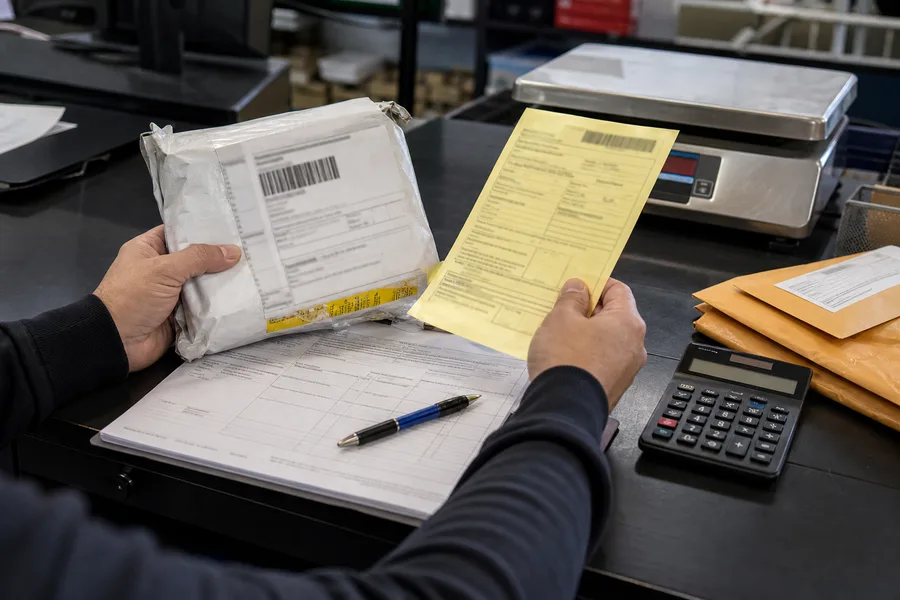
Small parcel sellers should not wait for a fee dispute to decide who pays duty, clearance, returns and support costs. The landed-cost file belongs in pricing.
Why IOSS controls matter
IOSS and low-value parcel rules shape how sellers explain tax and import charges to EU customers. When rules or fees move, the seller that lacks a landed-cost file ends up solving pricing, logistics and support issues at the same time.
The file should show which SKUs use which route, who acts as importer, who pays duties and taxes, what the customer sees at checkout and how returns are handled. Without that map, support teams improvise and finance learns about the problem after margin has already moved.
Cost owner map
A landed-cost file should name the owner of each charge. Duty, VAT, clearance, carrier surcharges, return freight and customer refunds may sit in different systems. The seller should make one table that connects those costs to SKU and route.
The checkout promise should match the table. A product page that says free delivery can still be truthful, but only if the seller understands which import and support costs it has absorbed. If the seller passes some charges to the customer, the support script must say that before a dispute.
| Cost point | Decision | Record |
|---|---|---|
| Tax and duty | Included, collected or customer-paid | Checkout and finance model |
| Clearance fee | Seller, carrier or customer | Carrier terms and support script |
| Return cost | Refund and route decision | Return policy |
| Held parcel | Evidence owner and deadline | Broker exception log |
Case pattern for hidden margin loss
A seller prices low-value goods into the EU with a simple shipping promise. A carrier route changes and more parcels create customer questions. Support refunds some buyers, logistics switches labels and finance only sees the issue when contribution margin drops.
A landed-cost file would have forced the decision before the route changed. The seller would know whether to reprice, narrow EU offers, change fulfilment or update customer terms.
Seller checklist
Start with the top parcels by volume and the SKUs with the thinnest margin. A spreadsheet is enough if it ties route, price, tax, duty, clearance and return assumptions together.
The seller should compare the model with actual exception logs each month. If held parcels cluster around one product or route, fix the data and pricing before the next promotion.
- List EU-bound parcel SKUs by route and volume.
- Record duty, tax, clearance and return assumptions.
- Align checkout language with the cost owner map.
- Give support a script for charges and held parcels.
- Review exception costs after route or price changes.
Thirty-day field test
A useful test is to put one live order, one active listing and one supplier file beside this briefing. The team should walk through the records as if a platform reviewer, customs officer or buyer asked for proof tomorrow morning. The exercise should produce a short gap list, not a presentation. Each missing record needs an owner, a due date and a business decision if the record cannot be obtained.
Do not wait for a perfect compliance system. Pick the highest-risk product in the category and test the file with the people who would answer the real request: sourcing, logistics, finance, marketplace operations and customer support. If those teams give different answers, the company has found the risk before an outside reviewer does. That is the value of the exercise.
Keep the record of the test in the same folder as the order or listing. A short note with the reviewer name, date, missing evidence and final decision gives the next reviewer a starting point. It also stops teams from repeating the same conversation after every customer question, route change or platform notice.
Set a review rhythm after the first pass. Thirty days is enough for an initial cleanup, but supplier changes, product edits and route changes should reopen the file. The rule is simple: when the commercial fact changes, the evidence file changes with it.
The team should keep a change log beside the evidence. It should say which document changed, who approved the change and which live product, route or supplier record was affected. That log turns a pile of files into a working control because later reviewers can see the decision path instead of guessing why an old record was replaced.
- Choose one product or shipment that is still active.
- Ask who owns each evidence item and where it is stored.
- Compare the public claim with the internal document.
- Record the business action if evidence is missing.
- Repeat the test after the next supplier, route or listing change.
Is landed cost only a finance model?
No. Landed cost affects listing promises, broker instructions, support scripts, returns and customer refunds.
Which sellers should act first?
Sellers with low-price EU parcels, thin margins, frequent returns or unclear importer roles should build the file first.


Leave a comment